
 Raise The Rouf Health
Introduction
If you’ve ever tried to lose weight but have left unsuccessful, you are not alone! Weight loss is tough, especially when we don’t see the results we’re looking for! It makes it hard to stay motivated, which is why it’s so common for weight loss programs and diets to be short lived.
Therefore, I think that it’s to everyone’s benefit to understand how the the process of weight loss occurs and the different components involved. It’s so much more than simply “move more, eat less,” and my goal is to spread more awareness about different factors, and how you can use your knowledge to achieve your health goals! The more you know, the higher your confidence will be and the more you can then help others in your life!
Now, let’s dive into some of the overarching principles when it comes to weight loss. In this post, we’ll overview some key ideas, setting the stage for future posts to dive into ore detail!
Intake Versus Output
- Output
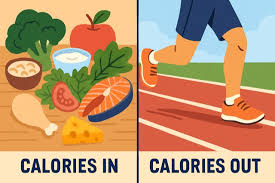
- The total amount of Calories that we expend on any given day is referred to as our “Total Daily Energy Expenditure,” or TDEE. It is broken down into 3 different components, to be discussed in more detail in future posts. These consist of
- 1). Basal Metabolic Rate (BMR) – the number of Calories burned by simply being alive and breathing
- 2). Thermic Effect of Physical Activity (TEPA) – what we burn through both planned workouts, as well as daily tasks and chores (e.g. laundry, cooking, active jobs, work commutes, fidgeting, etc.)
- 3). Thermic Effect of Food (TEF) – the energy we burn to digest, absorb, store, and use the food that we eat! Yes, we do actually burn additional Calories simply by eating!
- Together, these three make up our total daily energy expenditure, and each will be described in more detail in future posts!
- The total amount of Calories that we expend on any given day is referred to as our “Total Daily Energy Expenditure,” or TDEE. It is broken down into 3 different components, to be discussed in more detail in future posts. These consist of
- Intake
- The total amount of Calories that we consume through our diet on any given day is our energy intake.

- Energy Law: Energy is never lost! It is transferred from thing to thing, but it always must be stored somewhere!
- All energy must go somewhere, and in the case of weight loss, that “somewhere” is excess body fat storage! So, the balance of our output and intake are crucial when trying to lose weight. The goal is to be burning more than we are consuming!
Balancing Energy In & Out
- Energy Balance
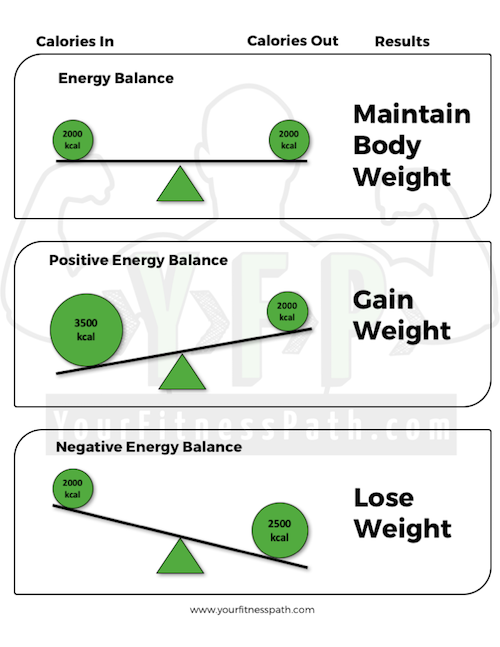
- When our total daily food intake is equal to our total daily expenditure, we are in what is called a state of energy balance. Simply put, intake is equal to output.
- Positive Energy Balance
- When our daily food intake is greater than our daily expenditure, we are in positive energy balance. Long term, this leads to weight gain. Remember, energy is not lost! So, if we eat more than we burn, we have to store that energy somewhere!
- Negative Energy Balance
- When we burn more energy than we take in, we are in negative energy balance. Overtime, this leads to weight loss!
- Below is a nice visual to further describe these terms!
Closing Thoughts…
Now you know that losing weight isn’t about starving yourself, or doing these extreme diets that aren’t sustainable. As nice as it would be to lose all of our excess weight in a few days, it simply just doesn’t work that way. With weight loss, playing the “long game” is key, using strategies that we can maintain through it all! We’ve now defined some key terms that are involved in how our weight increases, decreases, or stays contestant. There are so many fascinating components that play into weight loss and our overall health journey, but don’t stress! Future posts in the “healthy weight” category will dive into more detail on various topics, so that you can become a more knowledge, healthful individual, stepping towards a better version of yourself each and every day!
